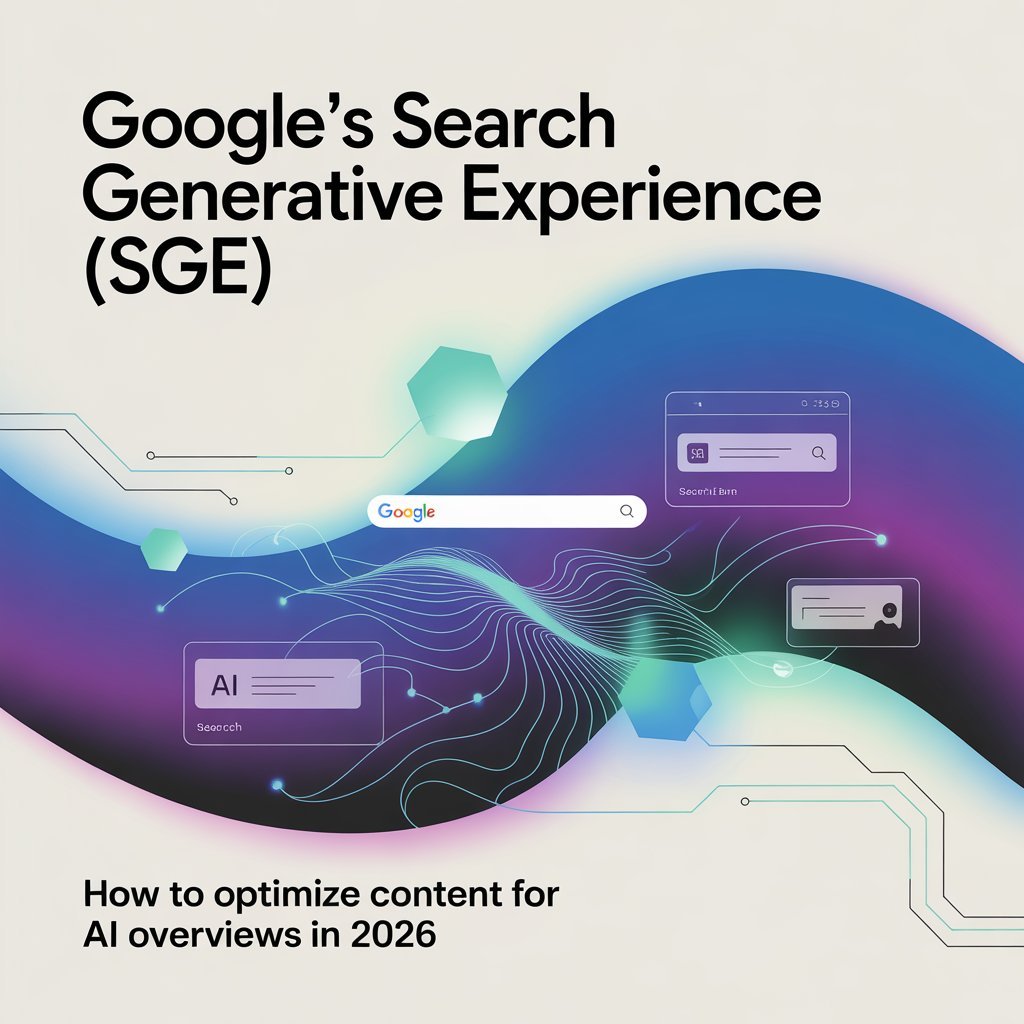
SGE optimization 2026has become a critical focus for digital marketers and content creators as Google’s Search Generative Experience fundamentally reshapes how users discover and consume information online. With AI-powered snapshots now appearing at the top of search results, understanding how to optimize content for Google SGEis no longer optional—it’s essential for maintaining visibility and traffic in the evolving search landscape.
This comprehensive guide explores proven strategies to ensure your content appears in Google AI Overviews SEO results and remains competitive as artificial intelligence continues transforming search engine behavior.
What is SGE Optimization for SEO?
What is SGE optimization for SEO? In simple terms, it’s the process of structuring and creating content that Google’s AI can easily understand, extract, and cite within its generative AI responses. Unlike traditional SEO that focused primarily on ranking in the top 10 blue links, SGE optimization ensures your content becomes a trusted source that Google’s AI references when generating comprehensive answers.
Search Generative Experience uses large language models to synthesize information from multiple sources, presenting users with AI-generated summaries before traditional search results. When users ask complex questions, SGE provides conversational, contextual responses drawn from authoritative web content—potentially including yours.
The challenge? Google’s AI doesn’t simply reward keyword optimization. It prioritizes content that demonstrates expertise, provides clear answers, and offers genuine value—qualities that align with Google’s E-E-A-T (Experience, Expertise, Authoritativeness, Trustworthiness) principles.
Core Principles of SGE Content Strategies 2026
Successful SGE content strategies 2026 revolve around several foundational principles that differ significantly from traditional SEO approaches:
1. Answer-First Content Structure
Google’s AI favors content that immediately addresses user intent. Position your primary answer within the first 100-150 words, then expand with supporting details, examples, and context. This “inverted pyramid” approach ensures AI models can quickly extract and cite your most valuable information.
2. Conversational, Natural Language
SGE responds to conversational queries, so your content should mirror natural speech patterns. Write as if explaining concepts to an intelligent colleague rather than stuffing keywords into rigid sentences. Questions embedded naturally in subheadings (like “What is SGE optimization for SEO?”) help AI understand your content’s purpose.
3. Structured Data and Schema Markup
Implementing structured data remains crucial for Google AI Overviews content optimization guide success. Use schema markup for:
- FAQ sections
- How-to guides
- Articles and blog posts
- Product information
- Reviews and ratings
- Organization details
Schema helps Google’s AI understand content relationships and extract specific information types efficiently.
4. Topic Clusters Over Isolated Articles
Build comprehensive topic clusters rather than standalone articles. Create pillar content covering broad subjects, then link to detailed subtopic pages. This interconnected structure helps AI understand your authority across entire subjects rather than isolated keywords.
How to Optimize Content for Google SGE 2026
Implementing practical how to optimize content for Google SGE 2026 tactics requires both strategic planning and technical execution:
Content Formatting Best Practices
Clear Hierarchical Structure: Use H1, H2, and H3 tags logically to create scannable content hierarchies. AI models parse these structural elements to understand content organization and importance.
Concise Paragraphs: Keep paragraphs to 2-4 sentences. Shorter blocks of text are easier for AI to process and cite accurately.
Bullet Points and Lists: When presenting multiple items, options, or steps, use formatted lists. AI can extract and present list items more efficiently than parsing dense paragraphs.
Descriptive Subheadings: Craft subheadings that clearly indicate the content that follows. Avoid clever wordplay in favor of descriptive clarity.
Content Depth and Quality
Comprehensive Coverage: Address topics thoroughly, anticipating related questions users might ask. Google’s AI rewards content that comprehensively covers subjects rather than surface-level treatments.
Primary and Secondary Sources: Reference authoritative sources, studies, and data. Include proper attribution and links. AI models evaluate source quality when determining trustworthiness.
Original Insights: While comprehensive coverage matters, original perspectives, case studies, and unique data distinguish your content from competitors. SGE increasingly favors content with proprietary insights.
Regular Updates: Keep content current. Google’s AI prioritizes recently updated content that reflects the latest information, particularly for rapidly evolving topics.
Technical SEO for SGE
Page Speed Optimization: Fast-loading pages remain crucial. Google’s AI may deprioritize slow-loading content, particularly for mobile users.
Mobile Responsiveness: With mobile-first indexing standard, ensure your content displays perfectly across all devices.
Core Web Vitals: Maintain excellent scores for Largest Contentful Paint (LCP), First Input Delay (FID), and Cumulative Layout Shift (CLS).
Clean URL Structures: Use descriptive, keyword-inclusive URLs that clearly indicate content topics.
GEO for SGE Rankings: The Generative Engine Optimization Framework
GEO for SGE rankings (Generative Engine Optimization) represents an emerging discipline focused specifically on optimizing for AI-powered search experiences. Key GEO strategies include:
Citation-Worthy Content
Create content formatted for easy citation. When making claims, use clear attribution formats like:
- “According to [source], [statistic or fact]”
- “Research from [institution] demonstrates that [finding]”
- “[Expert name], [credentials], explains that [insight]”
This citation-friendly formatting makes it easier for AI to accurately attribute information when generating responses.
Question-Answer Pairs
Embed explicit question-answer pairs throughout content. Format these prominently:
Question: [Specific user query] Answer: [Clear, concise response in 2-3 sentences] Detail:
[Expanded explanation with supporting information]
Semantic Keyword Integration
Rather than exact-match keywords, focus on semantic variations and related concepts. AI models understand contextual relationships, so comprehensive topic coverage matters more than keyword density. Include synonyms, related terms, and conceptually connected phrases naturally throughout content.
Entity Optimization
Optimize for entities (people, places, organizations, concepts) rather than just keywords. Clearly establish entity relationships within your content. For example, when discussing a company, reference its founders, headquarters, products, and industry context.
Measuring SGE Performance
Traditional metrics like rankings and click-through rates remain important, but SGE optimization 2026 requires new measurement approaches:
AI Overview Appearances: Monitor how frequently your content appears in SGE snapshots. Tools are emerging to track SGE citations specifically.
Traffic Quality Over Quantity: Users arriving via SGE may be more qualified but fewer in number. Analyze engagement metrics, conversion rates, and time-on-page rather than raw traffic volume.
Source Attribution: Track when Google’s AI cites your content as a source within generated responses. These citations, even without clicks, build authority and brand recognition.
Featured Snippet Retention: Content appearing in traditional featured snippets often appears in SGE responses. Monitor featured snippet performance as an SGE proxy metric.
Content Types That Perform Well in SGE
Certain content formats naturally align with Google AI Overviews content optimization guide principles:
Comprehensive Guides: Long-form, authoritative guides covering topics thoroughly perform exceptionally well in SGE.
How-To Content: Step-by-step instructional content with clear formatting allows AI to extract and present actionable information.
Comparison Articles: Content comparing options, products, or approaches helps AI provide balanced recommendations to users.
Expert Commentary: Content featuring credentialed experts with clear credentials and original insights stands out in AI-generated responses.
Statistical Resources: Pages aggregating relevant statistics with proper sourcing become go-to references for AI models.
Common SGE Optimization Mistakes to Avoid
Even experienced creators make errors when adapting to SGE content strategies 2026:
Over-Optimization: Forcing unnatural language or excessive keyword usage actually hurts SGE performance. AI models detect and deprioritize manipulative content.
Ignoring User Intent: Creating content optimized for search engines rather than users fails in the SGE era. AI evaluates whether content genuinely serves searcher needs.
Neglecting E-E-A-T Signals: Weak author credentials, missing citations, or lack of expertise indicators reduce AI trust in your content.
Duplicate Content: Rehashing existing information without adding value or unique perspective reduces SGE visibility.
Poor Mobile Experience: Content that doesn’t function well on mobile devices gets deprioritized in AI-powered results.
The Future of Search: Preparing Beyond 2026
While this guide focuses on SGE optimization 2026, successful content strategies must remain adaptable. Google’s AI capabilities will continue evolving, likely incorporating:
- Multimodal content analysis (text, images, video combined)
- Deeper personalization based on user context
- Real-time information synthesis
- Enhanced fact-checking and verification systems
Future-proofing your content means committing to genuine quality, expertise, and user value rather than chasing algorithm tricks. Content that serves human needs first will remain relevant regardless of technological shifts.
Conclusion
Mastering SGE optimization 2026 requires rethinking content creation from the ground up. Success in Google’s AI-powered search landscape demands answering user questions directly, demonstrating genuine expertise, structuring content for machine understanding, and maintaining unwavering quality standards.
The shift to AI Overviews doesn’t diminish the importance of great content—it amplifies it. As Google’s AI becomes more sophisticated at evaluating quality, expertise, and trustworthiness, only content that truly serves user needs will consistently appear in generative responses.
By implementing the strategies outlined in this Google AI Overviews content optimization guide, you position your content not just to survive but thrive in the evolving search ecosystem. The future belongs to creators who embrace AI-powered search as an opportunity to showcase genuine expertise and provide unparalleled value to their audiences.