If you’ve published great content but still aren’t ranking, the missing piece is probably backlinks. Link building strategies are the foundation of off-page SEO, and without a steady stream of quality links pointing to your site, even the best content struggles to break into page one of Google.
For business owners, startups, and entrepreneurs in Kochi and across Kerala, understanding how to earn quality backlinks the right way — without risking a Google penalty — is one of the highest-leverage skills in digital marketing. In this guide, we’ll walk through the exact white hat link building techniques that move the needle, along with real examples of how they work in practice.
Whether you’re running an e-commerce store, a local service business, or a growing startup, this article breaks down backlink building for SEO into a system you can actually follow.
What Is Link Building and Why Does It Matter?
Link building is the process of acquiring hyperlinks from other websites that point back to your own. Search engines like Google treat these links as “votes of confidence.” The more relevant, authoritative sites that link to you, the more trustworthy your website appears — and the higher it tends to rank.
Link building sits at the core of off-page SEO strategies, working alongside on-page optimization and technical SEO to form a complete ranking strategy. If you haven’t yet covered the technical side of your website, it’s worth running through a complete technical SEO audit checklist before investing heavily in outreach — a technically weak site won’t convert backlink authority into rankings efficiently.
Why Backlinks Still Matter in 2026
Some marketers assume backlinks matter less now that AI-driven search and E-E-A-T (Experience, Expertise, Authoritativeness, Trustworthiness) dominate the conversation. In reality, backlinks remain one of the clearest signals of authoritativeness that Google and AI answer engines use to decide who to trust. A site with strong domain authority backlinks is also more likely to be cited by tools like ChatGPT, Gemini, and Google AI Overviews — because these systems still lean on the same trust signals search engines have used for years.
How Search Engines Evaluate Link Quality
Not all backlinks carry equal weight. Google’s algorithms assess several factors before deciding how much value to pass through a link:
- Relevance — a link from a marketing blog carries more weight for an SEO article than a link from an unrelated niche site.
- Authority — links from established, trusted domains pass more value than links from brand-new or low-quality sites.
- Placement — a link inside the main body content is worth more than one buried in a footer or sidebar.
- Anchor text — natural, descriptive anchor text helps search engines understand what the linked page is about.
- Follow status — “dofollow” links pass ranking value, while “nofollow” links mainly drive referral traffic and brand visibility.
Understanding this scoring system is what separates real link building best practices 2026 from outdated, spammy tactics that used to work a decade ago.
White Hat Link Building Techniques That Actually Work
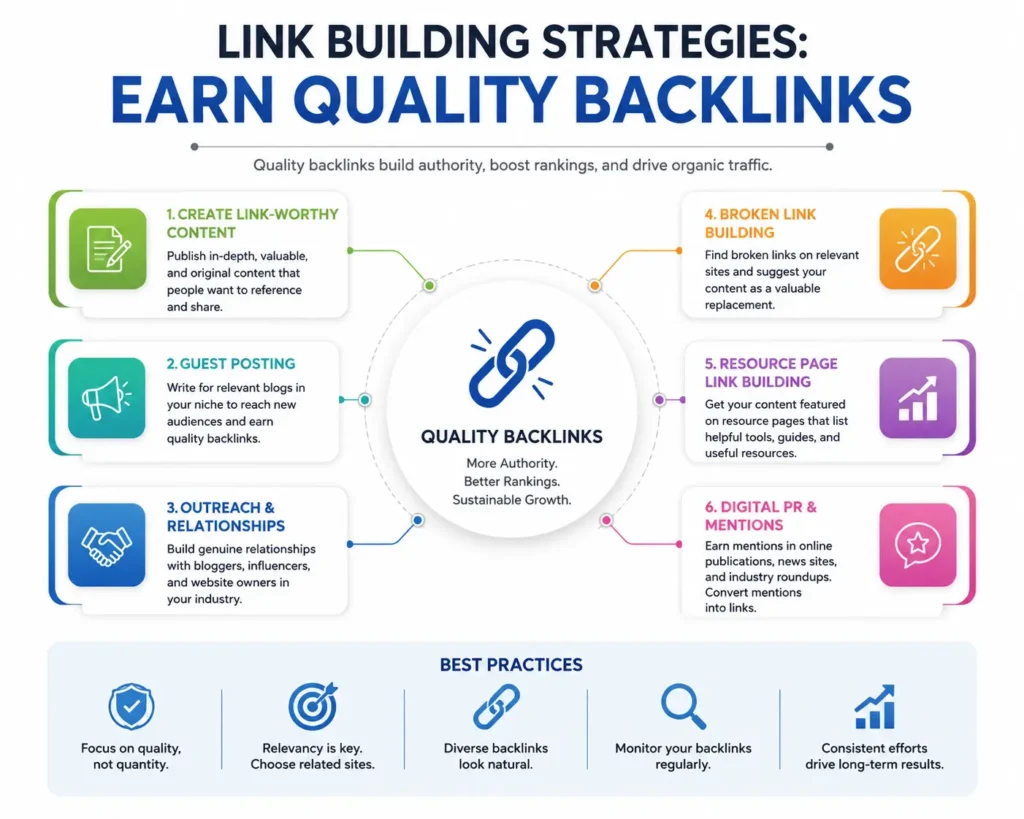
White hat link building means earning links through genuine value, not manipulation. These techniques take longer than shortcuts, but they build backlink profiles that survive algorithm updates.
1. Guest Posting for Backlinks
Guest posting for backlinks involves writing high-quality articles for relevant industry websites in exchange for a link back to your site. Done well, this builds relationships, exposes your brand to a new audience, and earns a contextual backlink.
To do this effectively:
- Target sites in your niche with genuine readership, not link farms.
- Pitch specific, valuable article ideas — not generic “can I write for you?” emails.
- Include one natural, relevant link, not a stuffed list of keywords.
2. The Skyscraper Technique Link Building Method
The skyscraper technique link building method, popularized by Brian Dean, involves three steps:
- Find existing content that already earns a lot of backlinks.
- Create something noticeably better — more current, more detailed, more visual.
- Reach out to the sites linking to the original piece and show them your improved version.
This works because you’re not asking for a favor — you’re offering an upgrade to something they’ve already decided is worth linking to.
3. Broken Link Building Method
The broken link building method is one of the most underused white hat tactics. Here’s how it works:
- Find pages in your industry that link out to resources which no longer exist (404 errors).
- Create or identify a similar, relevant resource on your own site.
- Email the site owner, point out the broken link, and suggest your page as a replacement.
Website owners generally appreciate being alerted to broken links, which makes this one of the higher-response-rate outreach tactics available.
4. Digital PR for Backlinks
Digital PR for backlinks focuses on getting your brand covered in the press, industry publications, or online media. This might include:
- Publishing original research, surveys, or local market data.
- Creating newsworthy stories tied to your industry or region.
- Building relationships with journalists and bloggers who cover your niche.
A single strong digital PR placement can generate multiple high-authority backlinks and long-term brand visibility that outlasts a single campaign.
5. Resource Page and Directory Links
Many industries maintain curated “resource pages” listing helpful tools, guides, or local businesses. Getting listed on relevant, well-maintained resource pages and reputable directories is a straightforward way to build domain authority backlinks, especially for local businesses in Kochi and across Kerala.
6. Testimonials and Case Study Links
If you’ve used a tool, software, or service and had a great experience, offering a testimonial in exchange for a link is a simple, ethical way to earn backlinks. Many companies feature client testimonials on dedicated pages that link back to the client’s website.
Off-Page SEO Strategies Beyond Traditional Link Building
Link building doesn’t exist in isolation. It works best as part of a broader set of off-page SEO strategies, including:
- Social signals — while not a direct ranking factor, social sharing increases content visibility, which indirectly leads to more organic backlinks.
- Local citations — for businesses targeting a specific city or region, being listed accurately across local directories builds trust and supports local search visibility. If you’re targeting customers specifically in Kochi, this pairs naturally with a focused local SEO strategy for Kochi businesses.
- Influencer and community engagement — genuine participation in industry forums, communities, and partnerships often leads to organic link mentions over time.
- Content that earns links naturally — original data, infographics, and in-depth guides tend to attract backlinks without any outreach at all.
Building Topical Authority Through Internal and External Links
Search engines don’t just look at how many sites link to you — they also look at how your own site’s content connects together. A well-linked internal structure signals to Google that your website has depth on a topic, which strengthens the impact of external backlinks pointing to that content.
For example, an article on entity SEO works well alongside a link building guide, since both topics feed into how Google understands your site’s authority and relevance. Similarly, businesses working on Core Web Vitals optimization will find that a technically fast, stable site helps convert backlink authority into actual ranking improvements.
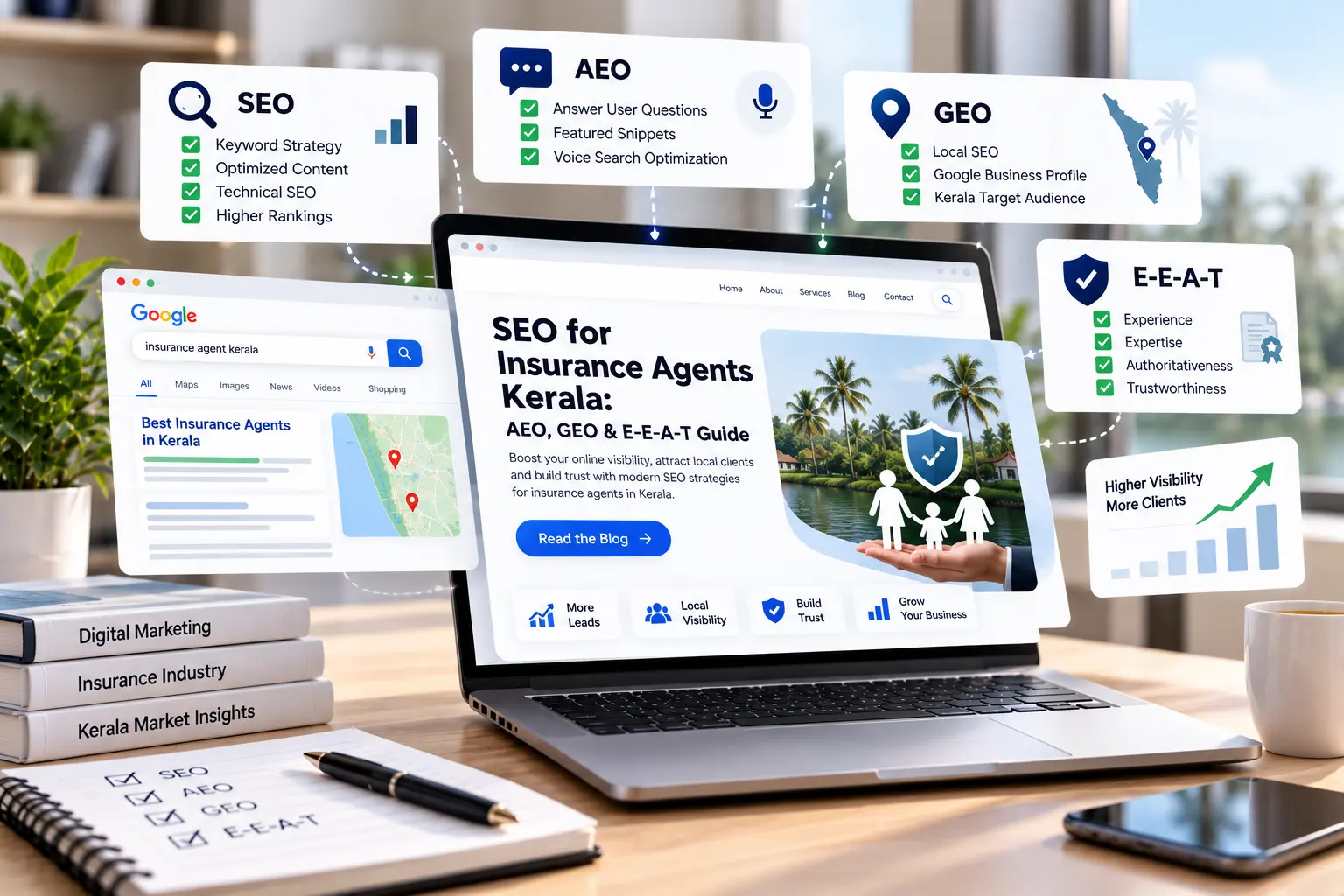
If you’re curious about where SEO is heading as AI search grows, it’s worth reading about SEO vs AEO vs GEO — because link building strategies increasingly influence visibility in AI-generated answers as well as traditional search results.
Common Link Building Mistakes to Avoid
Even well-intentioned businesses fall into these traps:
- Buying links in bulk from low-quality networks — this violates Google’s guidelines and can trigger a manual penalty.
- Over-optimized anchor text — repeatedly using the exact same keyword-rich anchor text looks manipulative to search engines.
- Ignoring relevance — a backlink from an unrelated industry rarely helps, and sometimes signals spam.
- One-and-done campaigns — link building is an ongoing process, not a one-time project.
- Neglecting content quality — no outreach strategy works if the content you’re promoting isn’t genuinely useful.
How to Build a Sustainable Link Building Strategy
A sustainable approach to earning quality backlinks combines several elements working together:
- Audit your current backlink profile to understand what’s already pointing to your site and identify toxic links worth disavowing.
- Create linkable assets — original research, comprehensive guides, tools, or templates that naturally attract attention.
- Build a target list of relevant websites, blogs, and publications in your industry or region.
- Diversify your tactics — combine guest posting, digital PR, broken link building, and resource page outreach rather than relying on just one method.
- Track and measure results — monitor referring domains, domain authority growth, and organic traffic movement over time.
This kind of ongoing content and outreach work is exactly why many Kerala businesses choose to outsource it. If content creation is your bottleneck, professional blog writing services can help you consistently produce the linkable content that supports outreach campaigns.
Frequently Asked Questions
1. How long does it take to see results from link building?
Most businesses start noticing measurable improvements in rankings and organic traffic within 3-6 months of consistent link building efforts. Because search engines need time to crawl, index, and factor in new backlinks, patience and consistency matter more than speed.
2. Is guest posting still effective for backlinks in 2026?
Yes, as long as it’s done selectively. Guest posting for backlinks works best when you contribute genuinely useful content to relevant, reputable sites rather than mass-publishing on low-quality guest post networks.
3. What’s the difference between white hat and black hat link building?
White hat link building techniques earn links through genuine value — content, relationships, and outreach. Black hat tactics, like buying links in bulk or using link farms, attempt to manipulate rankings artificially and risk penalties that can severely damage your site’s visibility.
4. How many backlinks does my website need to rank?
There’s no fixed number. Rankings depend on the quality and relevance of your backlinks relative to your competitors, not just quantity. A handful of highly relevant, authoritative links often outperforms hundreds of low-quality ones.
5. Can local businesses in Kochi benefit from link building?
Absolutely. Local businesses benefit from a mix of local citations, links from Kerala-based blogs and directories, and digital PR within regional media. This builds both domain authority backlinks and local search visibility simultaneously.
Final Thoughts
Earning quality backlinks isn’t about shortcuts — it’s about creating content worth linking to and building genuine relationships within your industry. By combining white hat link building techniques like guest posting, the skyscraper technique, broken link building, and digital PR, you create a backlink profile that supports long-term, sustainable growth.
If you’d like a tailored link building and SEO roadmap for your business, feel free to get in touch for a free consultation, or explore more strategies on the SEO blog.